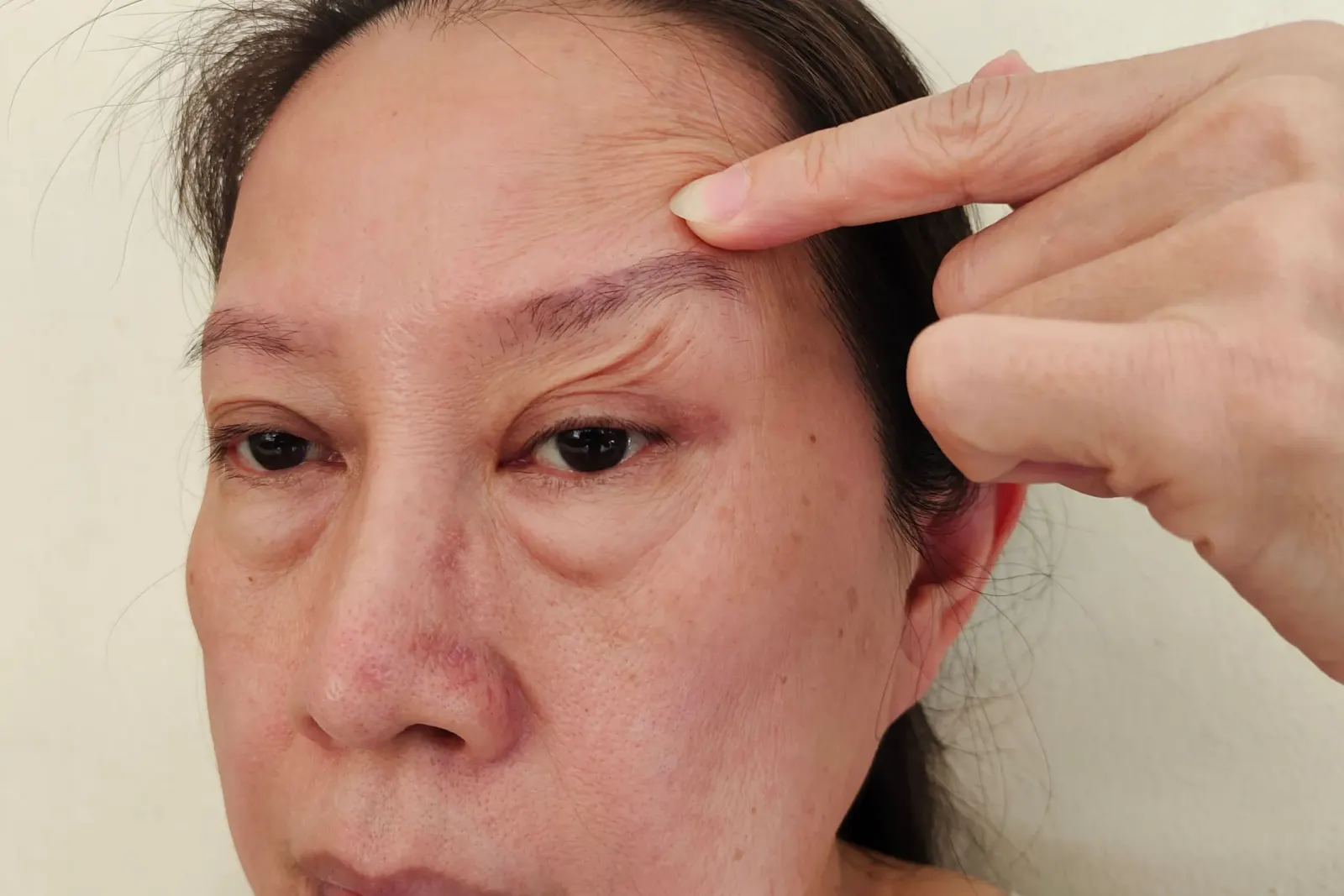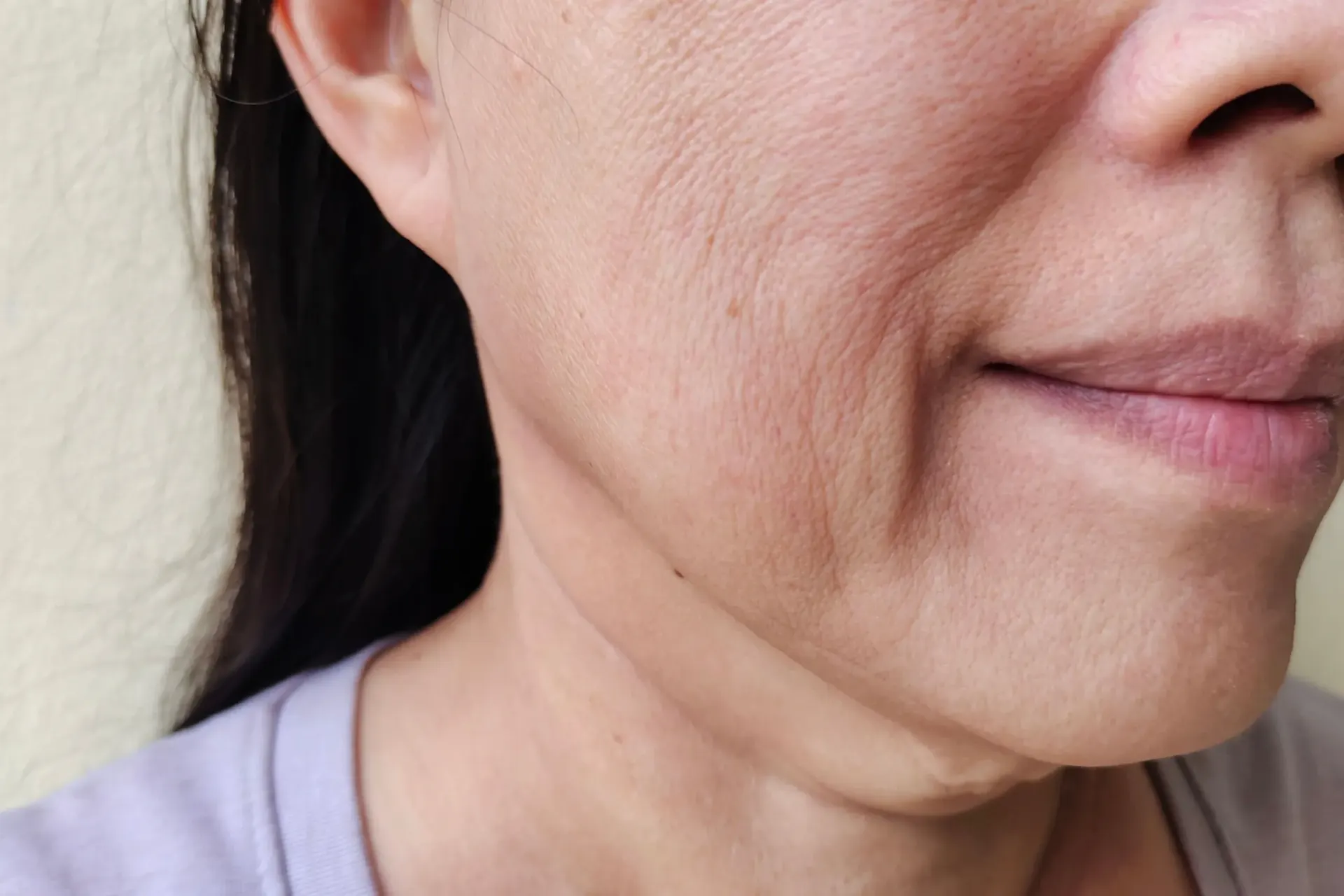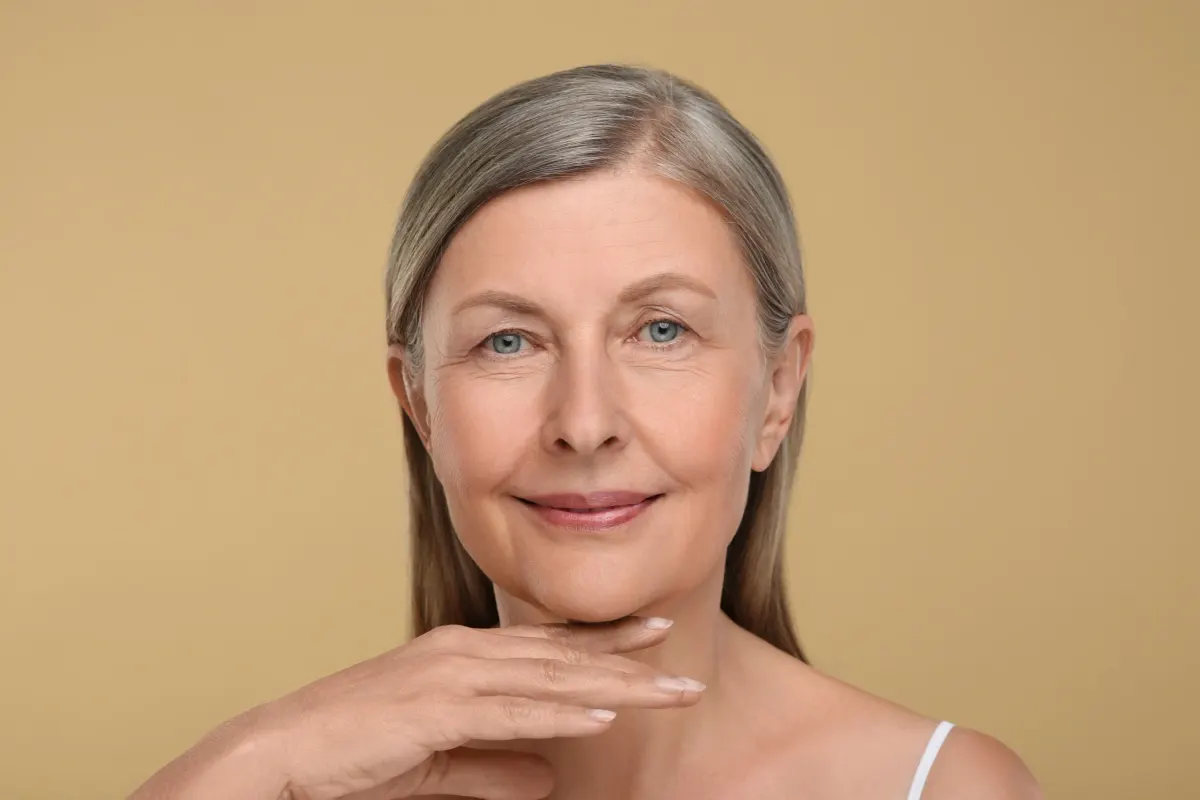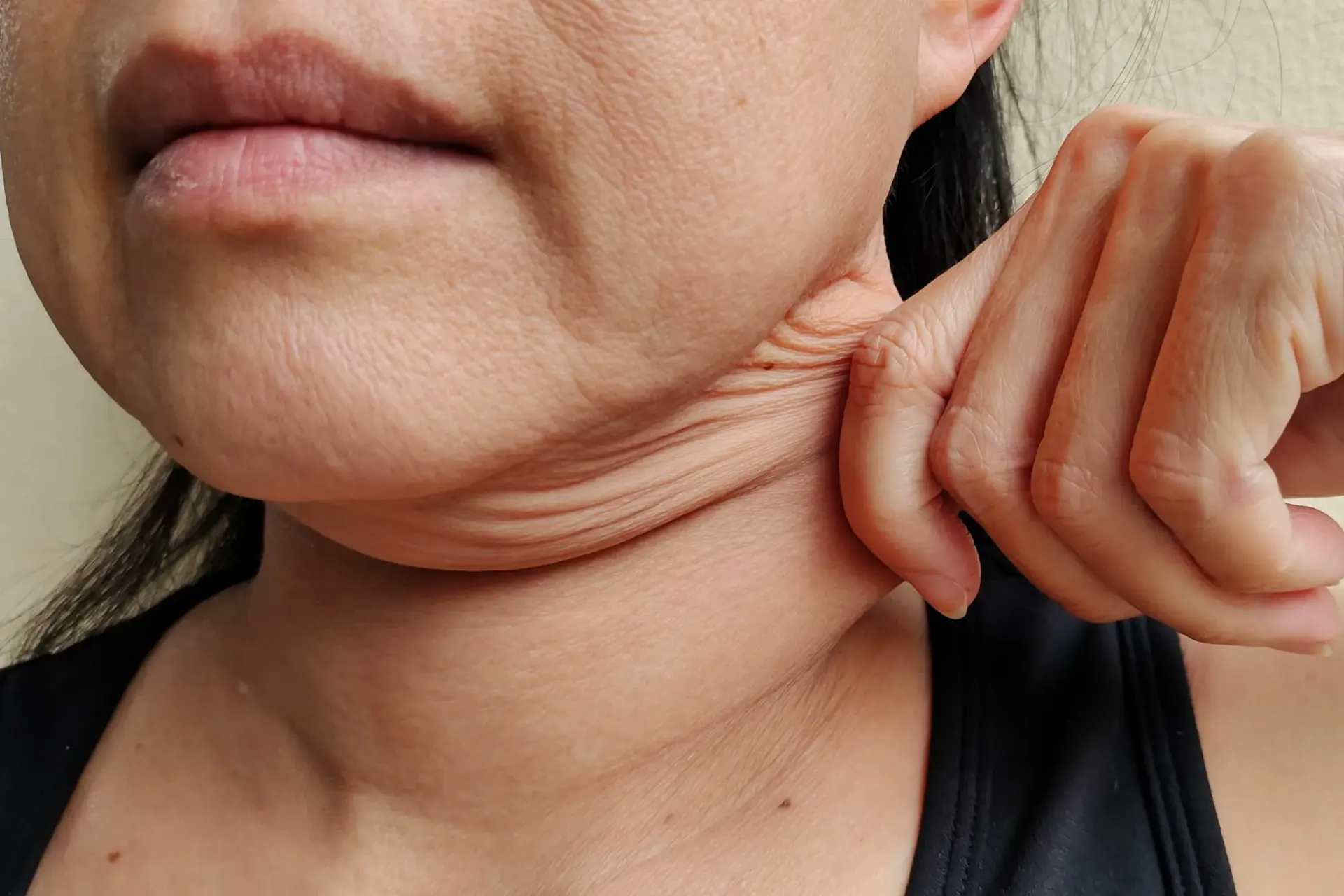
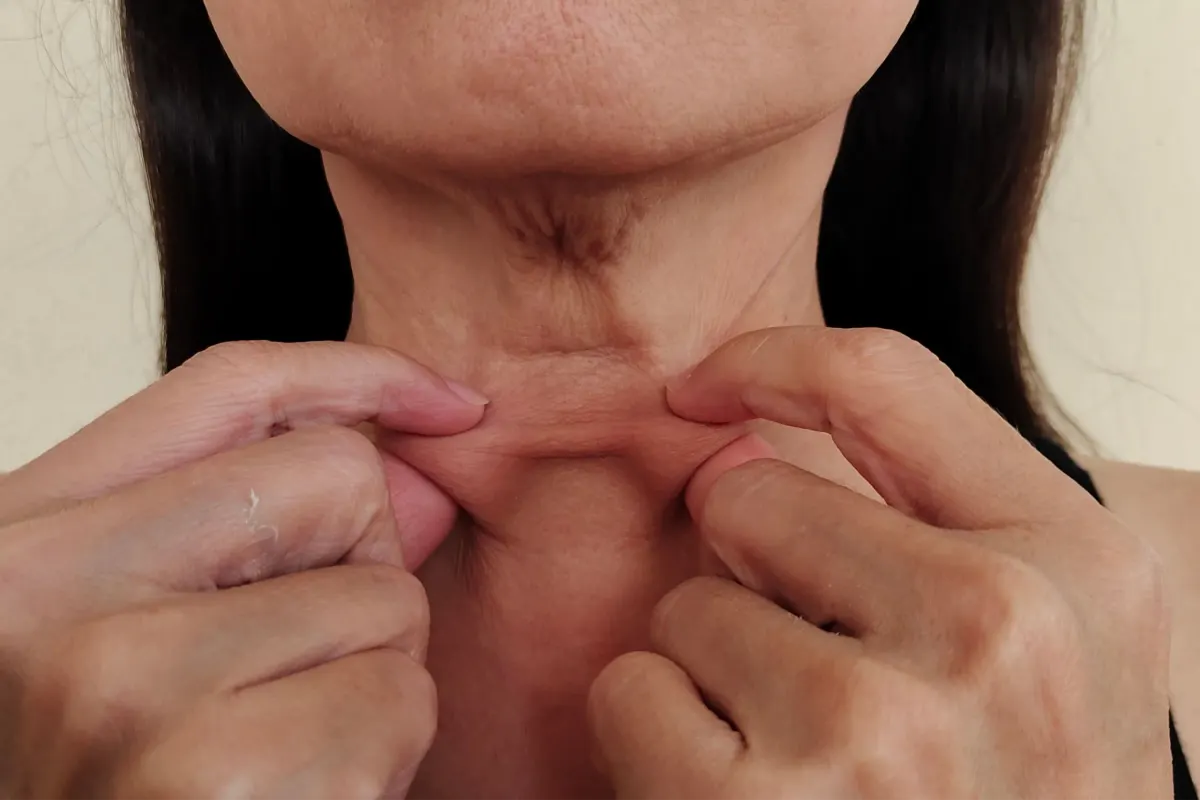
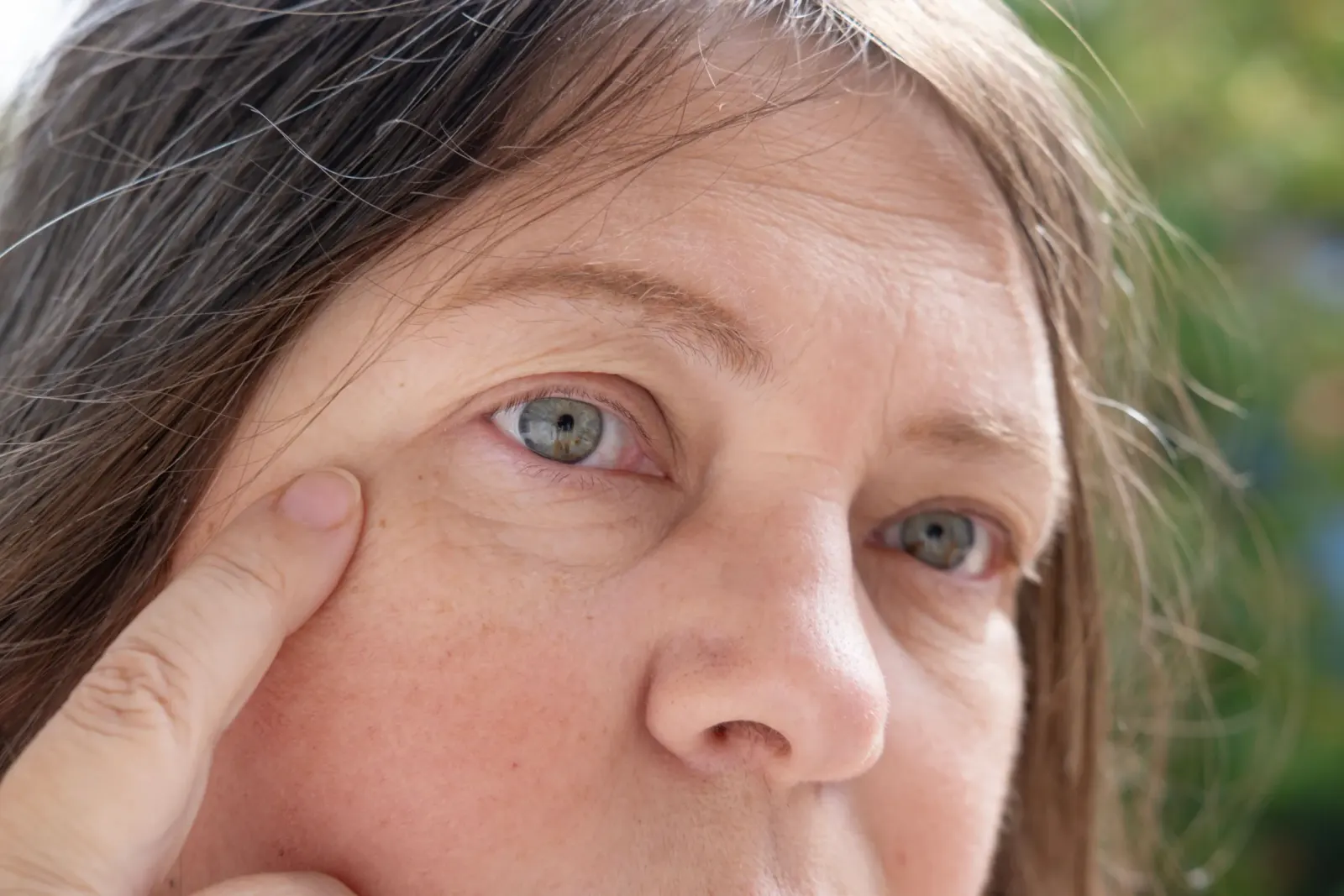
The structural integrity of your skin depends on a dense network of collagen and elastin fibers in the dermis. Collagen provides tensile strength and scaffolding, while elastin allows skin to snap back after stretching. After age 20, collagen production declines by approximately 1% per year, and this rate accelerates significantly after menopause, with women losing up to 30% of dermal collagen in the first five postmenopausal years.
As collagen fibers fragment and elastin loses its recoil capacity, the skin's structural framework weakens progressively. Gravity compounds this process by pulling compromised tissue downward, creating the jowling along the jawline, nasolabial fold deepening, and mid-face descent that characterize visible skin laxity.
The dermal extracellular matrix also plays a critical role. Glycosaminoglycans like hyaluronic acid, which normally retain moisture and support tissue volume, diminish with age. This loss of hydration and volume amplifies the appearance of laxity, as deflated tissue conforms less firmly to underlying bone and muscle structures.
Restoring lost volume and hydration with dermal fillers or Sculptra can help counteract this structural deflation alongside skin-tightening treatments.