

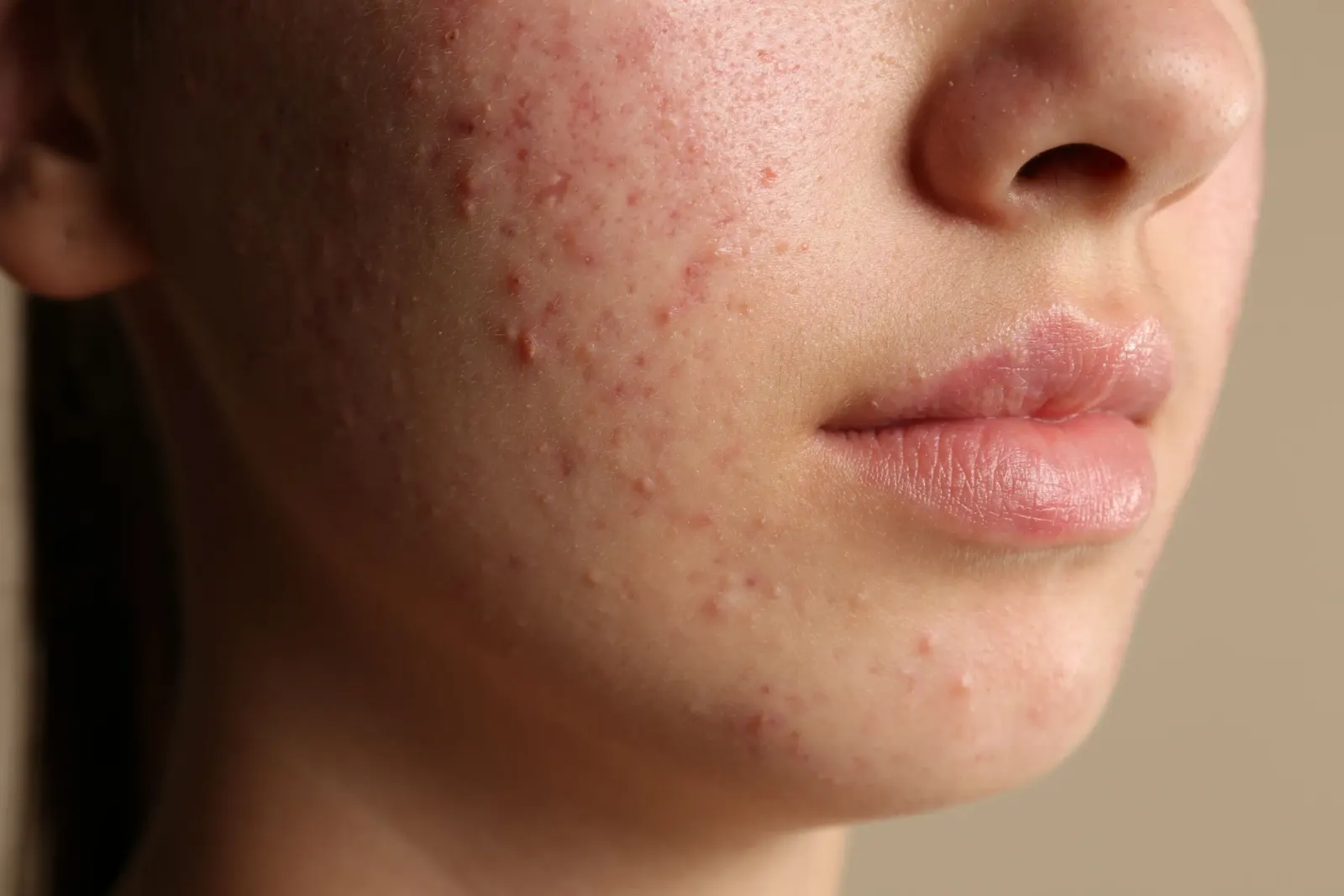
Acne begins with excess sebum production driven by androgen hormones, particularly dihydrotestosterone (DHT). Sebaceous glands can produce up to 50% more oil during hormonal surges, creating an environment where Cutibacterium acnes bacteria thrive within clogged pores. This overproduction typically accelerates during puberty, menstrual cycles, and periods of hormonal fluctuation.
When bacteria multiply inside blocked follicles, the immune system responds with inflammation, producing the redness, swelling, and tenderness characteristic of inflammatory acne. Deep cystic lesions rupture beneath the skin surface, damaging the dermal matrix and triggering an aggressive wound-healing response that often results in permanent scarring.
The scarring process depends on individual collagen remodeling capacity. Atrophic scars form when insufficient collagen fills the wound site, while hypertrophic scars result from collagen overproduction. Genetic predisposition determines roughly 80% of acne severity and scarring tendency, which is why identical skincare routines produce vastly different outcomes between individuals.